Designing Engagement: The Visual Strategy of Quizlet
Turning Knowledge into a Visual Experience
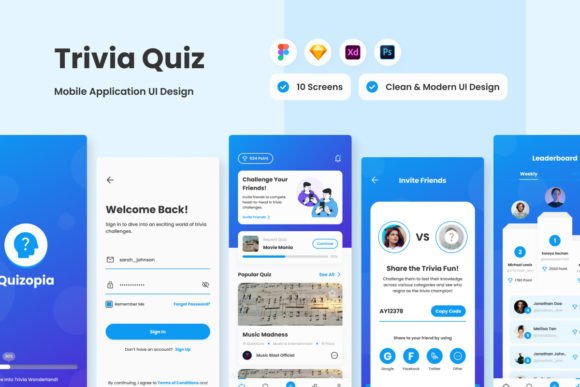
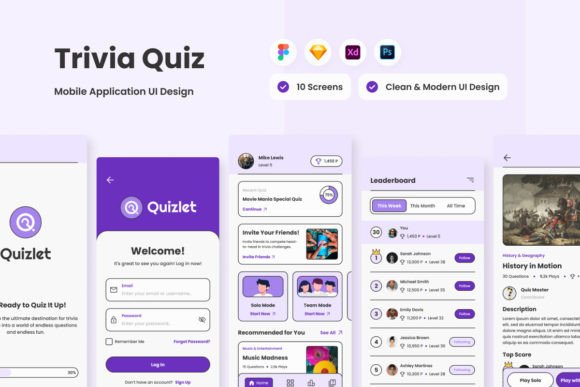
When we look at a tool like the Quizlet - Trivia Quiz Mobile App, we are observing more than just an educational utility; we are looking at a masterclass in user retention through design. In the crowded marketplace of mobile applications, simply having a good idea is rarely enough. The success of a trivia platform relies heavily on its typeface choices, color psychology, and the overall brand identity that guides the user. For designers and content creators, this application serves as a real-world case study on how to make information accessible and engaging. It transforms the sometimes daunting task of learning into a "voyage through knowledge realms," effectively using modern typography to lower the barrier to entry.
The core appeal lies in how the app balances utility with personality. It functions like a "treasure map with questions as clues," a concept that requires a visual language capable of sparking curiosity. The interface doesn't just display text; it invites interaction. By utilizing sans serif font families that prioritize legibility, the app ensures that whether a user is deciphering a clue about ancient civilizations or a viral meme, the reading experience remains effortless. This is a crucial lesson for anyone involved in web design or editorial design: your content is only as strong as the vehicle that carries it.
The Power of Organized Design Assets
One of the most striking aspects of high-performing apps like Quizlet is the architecture behind the scenes. The design community often focuses on the "sleek design and intuitive navigation," but these are the result of rigorous organization. For creative professionals working on similar projects, the value of well-structured design assets cannot be overstated. When you are dealing with a complex system that includes badges, quizzes, and social sharing features, your files need to be impeccable. We often see this reflected in professional templates that offer high-quality screen layouts where layers are well-organized and neat.
This level of organization directly impacts visual hierarchy. In a trivia setting, you need to distinguish between the question, the potential answers, and the timer or score. If your premium font styles are messy or your layers are chaotic, the user experience degrades rapidly. The Quizlet - Trivia Quiz Mobile App succeeds because it respects the user's cognitive load. It uses clear visual cues to guide the eye, a technique that is essential in packaging design and social media graphics alike. The lesson here is that "easy to adjust" isn't just a feature for the designer; it's a benefit for the end-user who needs a seamless flow.
Typography That Adapts to the User
Typography plays a pivotal role in how we perceive an application's personality. A trivia app needs to feel knowledgeable yet approachable—smart, but not stuffy. This is where the choice between a serif font and a sans serif font becomes a strategic decision. Serif fonts often evoke tradition and authority, which might be perfect for history questions, while sans serif fonts suggest modernity and cleanliness, ideal for tech or meme-based trivia. The best applications utilize a font pairing strategy that balances these moods.
For designers, evaluating a project fit means looking at how a creative font handles different weights and styles. Does it maintain its character when scaled down on a mobile screen? Does it command attention when used as a display font for a leaderboard header? The Quizlet - Trivia Quiz Mobile App demonstrates that adaptability is key. The text must be readable in high-stakes environments where users are scanning quickly. This adaptability extends to commercial font licensing as well; ensuring that your typography is legally cleared for all platforms—whether it's a mobile app, a desktop client, or printed marketing materials—is a non-negotiable part of professional work.
Practical Application for Creators and Entrepreneurs
If you are an entrepreneur, blogger, or small business owner, the visual principles found in the Quizlet - Trivia Quiz Mobile App can be applied to your own brand. You don't need to build a trivia empire to benefit from this approach. Consider how you can gamify your own content. Are you using logo design elements that are distinct and memorable? Is your typography helping to build brand recognition?
When selecting fonts for your next project—whether it is a newsletter, a product label, or a website overhaul—look for assets that offer flexibility. A font family that includes a script font or handwritten font can add a human touch to callouts or headers, while a clean geometric sans serif handles the body copy. The goal is to create a system that feels cohesive. Just as the app creates a consistent environment for "solo explorers" and "team players" alike, your brand’s typography should provide a consistent voice across all touchpoints.
Key Takeaways for Your Next Project
- Prioritize Readability: Regardless of how artistic a font looks, if it compromises the message, it fails. Test your typeface choices at various sizes, especially for mobile contexts.
- Organize Your Assets: Keep your design files—be it .fig, .xd, .sketch, or .psd—neatly organized. This saves time and ensures consistency when applying global text and color styles.
- Match Personality to Purpose: Use a display font to capture attention, but rely on standard, readable fonts for instructions and details. The "voyage" of your user should be guided by clear signage.
- Check Compatibility: Ensure your chosen fonts and assets are compatible across the platforms you use, such as Figma, Sketch, Adobe XD, and Photoshop, to maintain a smooth workflow.
Ultimately, the success of a platform like Quizlet lies in its ability to make the complex feel simple and the mundane feel exciting. By applying these design and typography principles to your own work, you can ensure your audience stays engaged, whether they are learning something new or discovering your brand.